







IICA Calls for Strengthening Agri-Food Systems in the Americas
The Inter-American Institute for Cooperation on Agriculture (IICA) urged the promotion of innovation and systemic transformation in the Americas to sustain its role as a pillar of global food, energy, and environmental stability.

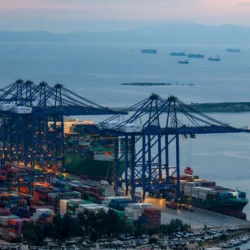
The Americas, a pillar of agri-food systems and the largest exporter of food. Photo @FAO
June 22, 2026 Hour: 9:09 am
🔗 Comparte este artículo
On Monday, the Inter-American Institute for Cooperation on Agriculture (IICA) called for strengthening agri-food systems in the Americas to guarantee food security and availability globally.
RELATED:
Venezuela Reports 9.4% Increase in Food Consumption
The statement was made by the IICA Director Muhammad Ibrahim during the 2026 World Conference of the International Food and Agribusiness Management Association (IFAMA), held at University College Cork, Ireland.
The Americas play a systemic role for the planet, as what happens on the continent affects global food availability, international prices, and supply chains.
In this regard, Ibrahim indicated that the world must understand that the Americas are not only a major exporter, but also “one of the pillars of global food, energy, and environmental stability.”
Currently, Latin America and the Caribbean is the world’s largest net food exporter, accounting for approximately 23% of global agri-food exports and nearly 13% of the global net value of agricultural and fisheries production. The region leads in strategic markets such as soybeans, corn, beef and poultry, coffee, sugar, fruit, fish, forestry products, and biofuels.
However, the IICA Director warned that the region will not be able to maintain its essential role in the future simply by expanding agricultural land or increasing input use.
To reduce pressure on forests, soils, water, and biodiversity, it is necessary to generate more value per hectare, worker, unit of water, fertilizer, and energy. In this context, Ibrahim emphasized that science and new technologies play a key role, as innovation allows the region to move from producing more to producing better and from exporting raw materials to generating more value. This will enable a deeper, more inclusive, sustainable, and resilient transformation of the agricultural sector.
Finally, the IICA Director maintained that the challenge now is to move from isolated successful experiences to a systemic transformation, which requires long-term investment, robust research systems, digital infrastructure, financing, and greater regional cooperation
Author: HGV/JF
Source: IICA